Ask most travellers what Jawai is known for and you get one answer: leopards.
It is a fair answer. The leopards here are unusual, they live in granite caves above working villages, and they are the reason most people book the trip in the first place.
But if leopards are the only thing you plan for, you will spend three days waiting for one animal and miss most of what is actually in front of you.
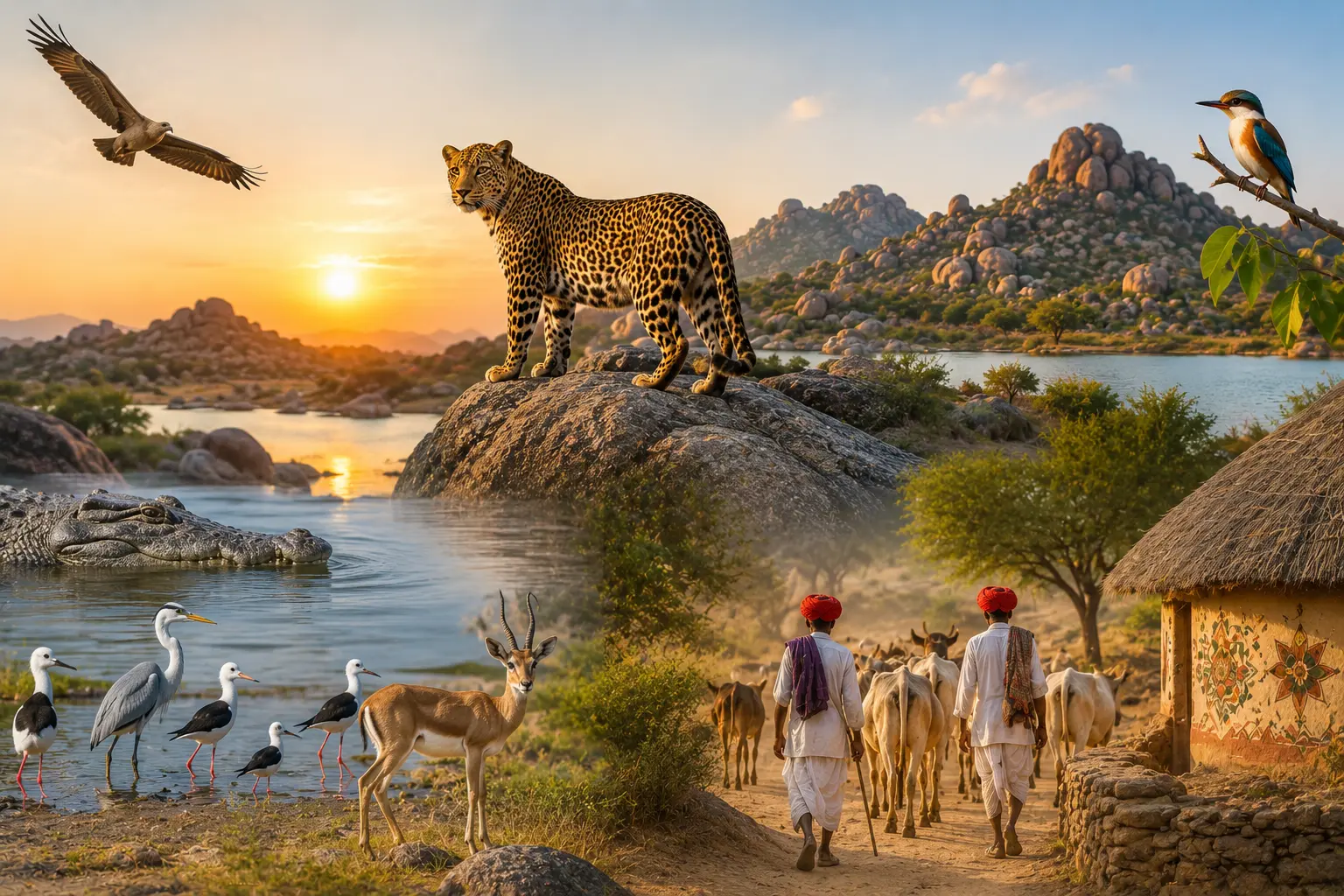
Jawai is a whole system. Dry granite hills, a large reservoir in the middle of an arid district, scrubland and farmland, thousands of waterbirds in winter, crocodiles in the shallows, and pastoral communities whose daily routine has been shaped around this landscape for generations. The leopards are part of that system, not separate from it.
This guide covers the rest of it — the birds, the other wildlife, the water, the culture, and what you can realistically do here beyond sitting in a jeep.
Why Jawai Is More Than a Leopard Destination
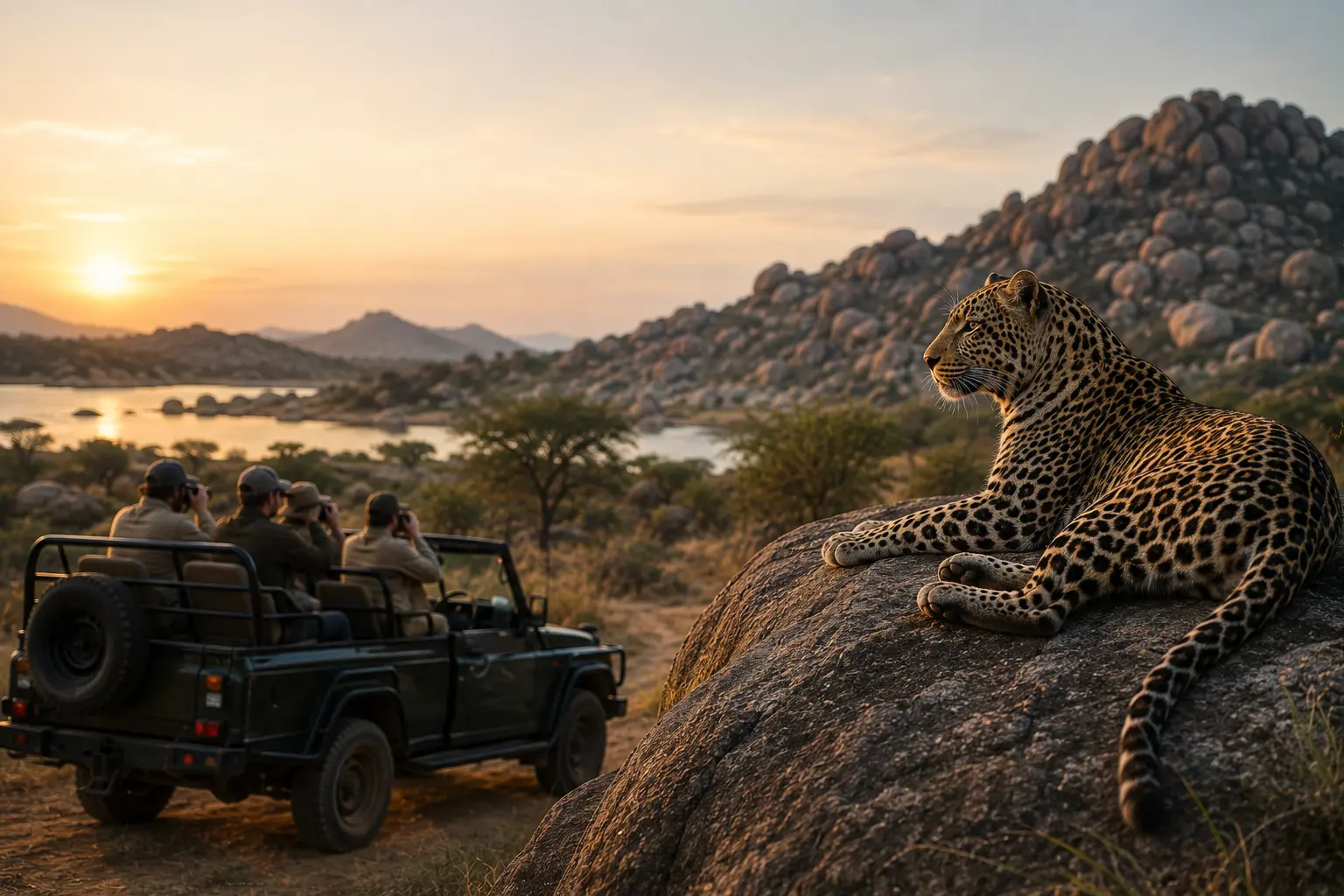
Leopards draw visitors for a good reason. In most of India, spotting one means a long wait in dense forest. In Jawai, the terrain is open, and an animal sitting on an exposed rock face can be visible from a distance. That is genuinely unusual.
But the same features that make leopards visible also make everything else interesting.
The rock is the frame. Rounded granite boulders and outcrops run through the whole landscape, giving it a shape you will not find elsewhere in Rajasthan. Even on a drive with no mammal sightings at all, the terrain is worth the time.
Water changes everything. Jawai Bandh holds a large body of water in a region that is otherwise dry for most of the year. In a landscape like this, water is the single biggest driver of wildlife. It concentrates birds, supports crocodiles, and pulls animals down from the hills.
People are part of the picture. This is not a fenced park emptied of human life. Herds move along the tracks, women collect water, temples sit high on the rocks. You are travelling through somewhere people live.
Put together, it means a trip to Jawai can be rewarding for a birder, a photographer, a family, or someone who just wants a quiet few days outdoors — not only for a wildlife specialist chasing one species.
The Unique Landscape of Jawai
The hills here are ancient granite, weathered over a very long time into smooth, rounded boulders stacked and split into caves, gaps and overhangs. There is no dense canopy. Visibility is long.
Between the hills you get:
- Dry scrub and thorn vegetation — hardy, low, drought-adapted species that survive long dry spells
- Farmland and grazing land — mustard, wheat and pulses in the cooler months, with livestock moving through
- Seasonal streams and low-lying ground that hold water briefly after rain
- The reservoir itself, which shrinks and expands dramatically depending on the monsoon
That last point matters more than most guides mention. The water level in Jawai Bandh varies a great deal between a good monsoon year and a poor one. In a full year, the shoreline pushes out and waterbirds spread widely. In a dry year, the water pulls back, mudflats appear, and wildlife concentrates differently. Two visits in different years can look quite unlike each other.
For travellers, this landscape has a practical effect: the driving is rough, sightings tend to be at a distance, and binoculars are more useful here than in a dense forest park.
Leopards of Jawai
Keeping this short, because it deserves its own article — and has one.
The granite caves give leopards cool, defensible shelter and a good vantage point. Farmland and grazing land around the hills support prey. The result is a leopard population living in close proximity to people rather than deep inside a forest.
Sightings depend entirely on animal movement on the day. A leopard can be resting inside a cave, out of sight, twenty metres from your vehicle. Signs of presence — pugmarks, alarm calls from langurs or peafowl, livestock reacting — are common. An actual sighting is not something anyone can promise you.
This is where a good local guide earns their fee. They know which animals have been using which hills recently, they read alarm calls correctly, and they know when to stay put rather than move on.
If leopards are your main focus, our Jawai leopard safari guide covers drives, timings, booking and how many safaris to plan.
Birdwatching in Jawai
This is the part most first-time visitors underrate, and it is the strongest reason to give Jawai an extra day.
The logic is simple. A large reservoir sitting in a dry district acts as a magnet. Birds that need open water in this part of western India have limited options, so they concentrate here — particularly through the cooler months, roughly October to March, when migratory species arrive.
Resident vs migratory: Resident birds are here year-round — raptors over the hills, kingfishers along the water, owls in the rocks, larks and chats in the scrub. Migratory birds arrive for the winter and leave again, and these are the ones that transform the reservoir into a serious birding site.
Species regularly reported around Jawai Bandh include greater flamingo, bar-headed goose, demoiselle crane, sarus crane, comb duck, spot-billed duck, painted stork, cormorants, egrets, herons and a range of ducks and waders. Raptors reported over the hills and water include eagles, ospreys and falcons, and the rocky terrain suits the Indian eagle-owl.
A note on numbers. You will see species counts for Jawai ranging from around 85 to over 200 depending on which website you read. These figures come from different sources counting different areas over different periods, and they are not directly comparable. The honest position is that Jawai is a rewarding birding site with a well-documented winter waterbird gathering — and that if you want a current, verifiable list, recent eBird checklists for Jawai Bandh are a far better reference than any tourism page.
Practical tips: Go early. Light is better, birds are more active, and the water is calm. Bring binoculars — this is not optional here, since much of the birdlife sits at a distance across open water. A bird app or field guide for the Indian subcontinent is worth downloading before you arrive, as mobile signal can be patchy.
| Experience | What You May See | Best Way to Experience It |
|---|---|---|
| Birdwatching | Resident and seasonal waterbirds, raptors | Quiet observation near water, early morning |
| Wildlife viewing | Mammals and reptiles of the scrub and hills | Guided safari drive |
| Nature photography | Granite hills, birds, wildlife | Golden hour, morning or evening |
| Cultural experience | Pastoral village life | Guided local visit with permission |
Crocodiles and Other Wildlife in Jawai
Mugger crocodiles live in the reservoir and are among the more reliable sightings in Jawai, often visible basking along the banks during the day. Watch from a safe distance and from where your guide indicates — the water’s edge is not a place to wander casually.
Mammals you may encounter in the scrub, farmland and hills include striped hyena, golden jackal, jungle cat, nilgai, Indian gazelle (chinkara), wild boar, common langur, mongoose and hare. Hyenas and jackals are largely crepuscular, so early morning and late evening are the realistic windows.
Reptiles beyond crocodiles include monitor lizards and a range of snakes, though snakes are rarely seen and usually best left alone.
You will find longer species lists online that include animals like sloth bear and Indian wolf. These occasionally appear in regional accounts, but they are not something to plan a trip around, and any operator presenting them as a likely sighting is overselling.
The honest framing for all of this: wildlife sightings in Jawai are unpredictable. What you see depends on season, water level, time of day, weather, where you happen to be, and simple chance. Two visitors on consecutive days can have completely different trips. Plan for variety rather than for a checklist.
Jawai Bandh and Its Role in the Ecosystem
Jawai Bandh is the dam built across the Jawai river — a tributary of the Luni — in the 1950s, and the reservoir behind it is the largest in western Rajasthan.
It was built for irrigation and drinking water, not for wildlife. But the ecological effect has been substantial. In a district where surface water is scarce for much of the year, a permanent reservoir provides a reliable resource for waterbirds, supports a resident crocodile population, sustains fish, and draws mammals down from the hills to drink.
For visitors, the shoreline offers something the jeep drives do not: the chance to stand still. Long views across water to granite hills, particularly around sunrise and sunset. Village life continuing around the edges — cattle, fishing boats, people going about their day.
A few things to keep in mind. Stay well back from the water where crocodiles are present. Do not walk out onto mudflats where birds are feeding or resting. Keep noise down; a large group talking loudly will clear a shoreline of birds in seconds.
Our dedicated piece on Jawai Bandh goes into more detail on the dam itself and what to expect there.
The Rabari Community and Life Around Jawai
The Rabari are a pastoral community long established across this part of Rajasthan and neighbouring Gujarat, traditionally herding sheep, goats and camels. Around Jawai, their grazing routes and settlements sit within the same terrain the leopards use.
What makes this notable is that leopards and livestock herders have coexisted here with far less conflict than you might expect in such close quarters. Local tolerance — reinforced in places by religious and cultural associations with hill shrines — is widely credited as a significant part of why leopards persist in this landscape.
It is worth being careful here. This is a living community, not a heritage exhibit, and the relationship between people and predators is more complicated than a simple story of harmony. Losing livestock has a real cost for a herding family.
If you take a village visit — and many stays offer one — approach it as a guest.
- Go with a guide who has an existing relationship with the community
- Ask before photographing anyone, their home or their animals, and accept a no
- Do not hand out money, sweets or pens to children
- Buy directly from local artisans and vendors if you want to contribute
- Dress modestly and follow your host’s lead
The same instinct applies to food. Regional cooking here reflects the same dry-country logic as everything else — millet, dairy, pulses, preserved ingredients. Our guide to local food in Jawai covers what to look for.
What Can Travellers Actually Do in Jawai?
| Experience | Best For | What Makes It Worthwhile |
|---|---|---|
| Leopard safari | Wildlife lovers | Open granite terrain, leopards living alongside villages |
| Birdwatching | Nature lovers, patient travellers | Reservoir concentrates resident and winter migratory birds |
| Jawai Bandh visit | Everyone | Crocodiles, waterbirds, long views, no jeep required |
| Wildlife & landscape photography | Photographers | Rock formations, strong low-angle light, varied subjects |
| Village visit | Culture-focused travellers | Insight into pastoral life and human-wildlife coexistence |
| Sunset viewing | Couples, families | Warm light on granite; low effort, high reward |
| Stargazing | Couples, families | Little light pollution in rural surroundings |
| Guided nature walk | Slow travellers | Plants, birds, tracks and signs at walking pace, where permitted |
A note on walks and evening activity: rules in the Jawai landscape are currently being tightened, including restrictions on night-time wildlife activity and artificial lights. What is permitted, where, and at what hours may differ from older information online. Confirm current options with your resort or operator before planning. For what evenings here are like, see our piece on Jawai after dark.
Jawai for Families, Couples and Photographers
For Families
Jawai works better for families than most wildlife destinations because it is not entirely dependent on one activity. When children lose patience during a long wait, there is a dam, a shoreline, birds, rocks and village life to fall back on.
Practical points: game drives are long and bumpy, so shorter and fewer usually works better with small children. Age policies vary between operators, and some restrict very young children on shared vehicles — check before booking rather than on arrival.
For Couples
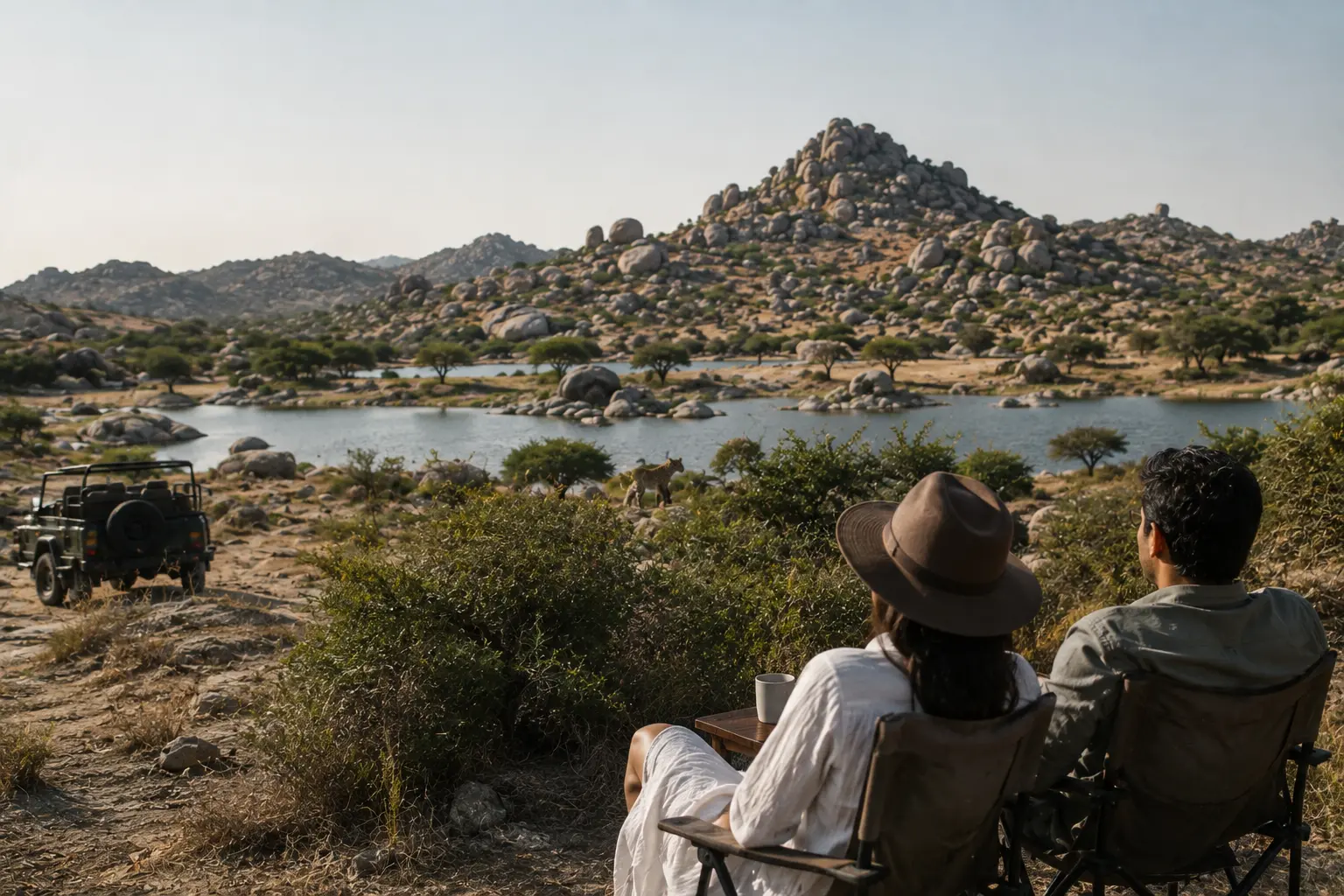
The appeal here is pace. Two drives a day at either end, and a long, quiet middle. Sunset over the reservoir, stargazing in genuinely dark rural skies, meals without a schedule. If you want a Rajasthan trip that is not a sequence of forts and city traffic, this is the counterweight.
For Photographers
Jawai gives you more than wildlife portraits. The granite responds well to low-angle light, so the landscape itself is a subject. Birds at the water give you flight and behaviour shots. Village life offers documentary work, with permission.
Bring a long lens and a wide one. Expect to wait. And keep the ethics straight: no flash on wildlife, no baiting, no pushing a vehicle closer than the guide allows, and no photographing nesting birds at close range. A photograph is never worth disturbing an animal for.
How to Experience Jawai Responsibly
Jawai’s coexistence model works because pressure on the landscape has stayed within limits. That has been changing, and regulations are being tightened in response. How visitors behave here genuinely matters.
- Do not feed any wild animal
- Never ask a driver to chase, block or crowd wildlife
- Keep voices low; silence phones during a sighting
- Maintain distance, especially near water where crocodiles are present
- No drones, spotlights or recorded animal calls
- Do not approach nesting or roosting birds
- Follow your guide’s instructions on where to stop and when to leave
- Carry all litter out with you
- Ask permission before photographing people, homes or livestock
- Choose operators who follow the rules even when it costs them a sighting
If a sighting is already surrounded by vehicles, the right call is to wait your turn or move on.
When Is the Best Time to Experience Jawai Wildlife?
Briefly: the cooler months from around October to March are the most comfortable for travel and coincide with the arrival of migratory waterbirds, which is why most visitors come then. Summer is hot and demanding but changes animal movement around water. The monsoon and immediately after brings green scrub and refills the reservoir.
Each season offers something different rather than one being simply better. For a proper month-by-month breakdown, see our guide to the best time to visit Jawai.
Where Should You Stay for a Jawai Wildlife Experience?
Your base matters more here than in most destinations, because it usually organises your safaris too.
What actually makes a difference for a wildlife-and-nature trip:
- Safari and activity coordination handled in-house, so drives, guides and timings are one conversation
- Local guides and trackers who know the terrain, the birds and the animals — not just the route
- Access to more than the jeep: birding spots, the dam, a village visit, a walk
- Comfortable rooms or tents and reliable meals at awkward hours, since you are up before dawn
- Quiet surroundings with open views, which is half the point of coming here
- Operators who follow responsible tourism rules rather than promising sightings
A well-run base is what lets you combine a morning drive, a few hours of birding at the water, and an evening under dark skies without spending the day arranging logistics. If you want to compare what different properties offer on those points, our overview of luxury resorts in Jawai is a practical starting point.
Is Jawai Worth Visiting If You Are Not a Wildlife Expert?
Yes — arguably more so than a conventional park.
In a tiger reserve, if you do not see the animal, the day can feel wasted. Jawai has more to fall back on. The landscape holds attention on its own. The dam gives you crocodiles and birds without a jeep. The villages give you something to think about. The nights are dark and quiet.
Jawai suits people who like being outdoors more than people who need a trophy sighting. If you enjoy long views, slow mornings, and the feeling of being somewhere that has not been arranged for tourists, you will get value here regardless of what walks past your vehicle.
If you are working out how to fit it into a wider trip, see how to reach Jawai from Delhi — it sits conveniently between Udaipur and Jodhpur.
Bringing It Together
Jawai wildlife is not one animal. It is granite hills that hold heat and shelter, a reservoir that pulls in flamingos and cranes each winter, crocodiles along the shoreline, hyenas and jackals at the edges of the day, and herding families whose routines have shaped how all of it fits together.
Come for the leopards by all means. Just build the trip so that a quiet drive is not a failed one.
Give yourself two or three nights, take drives at both ends of the day, spend real time at the water with binoculars, and leave space for a village visit and an evening under the stars. Because your stay usually coordinates all of that, choosing a base that handles the arrangements well is what makes a slower trip possible — our list of where to stay for a Jawai wildlife trip covers what to look for.
Wildlife sightings in Jawai are never guaranteed. Safari rules, permitted activities and timings in the Jawai landscape are currently under review following directions from the Rajasthan High Court and a draft Standard Operating Procedure from the Rajasthan Forest Department. Please confirm current details with your resort, operator or the Forest Department before travelling.