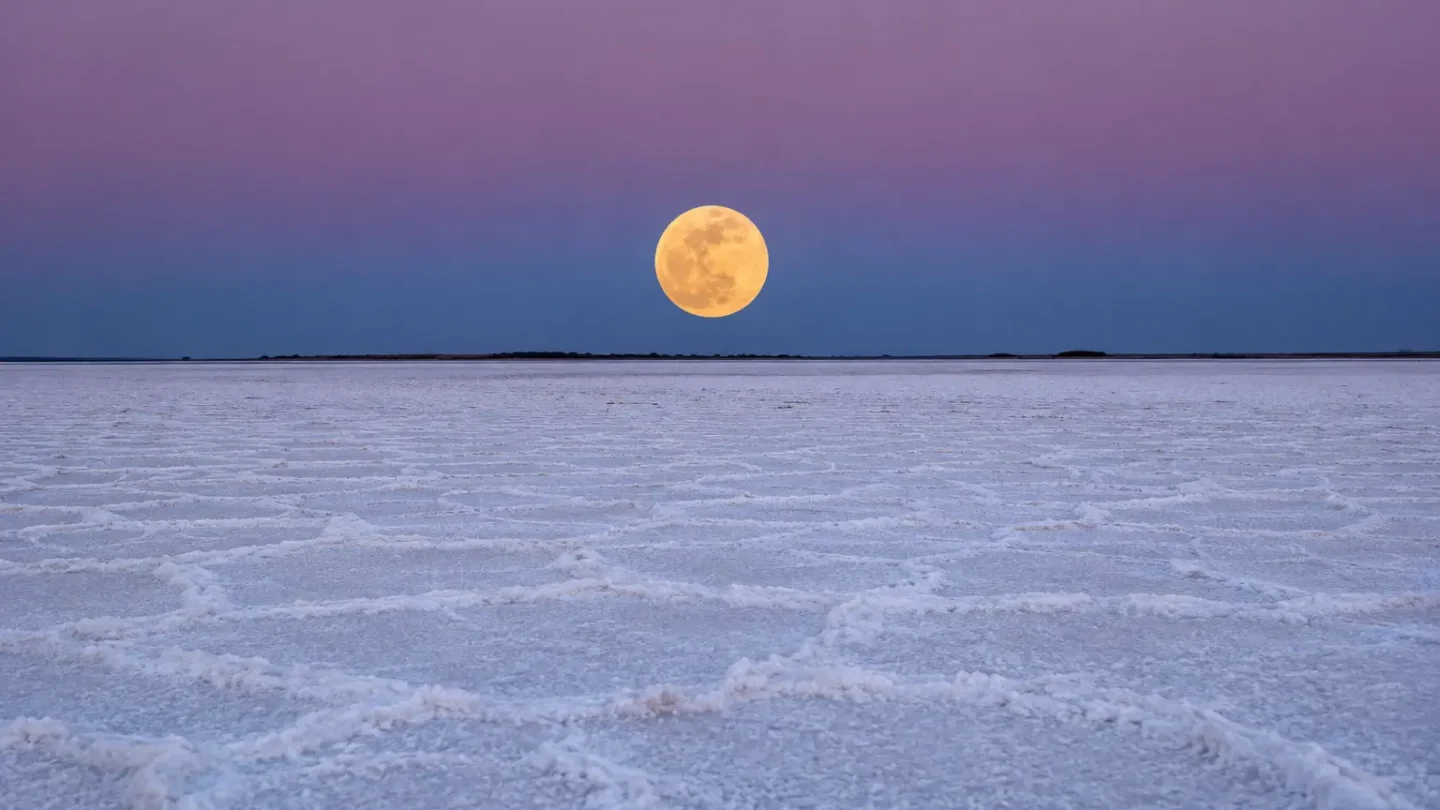
Imagine standing on a salt desert so vast and so white that the horizon simply disappears. The full moon rises, the ground begins to glow like fresh snow, and somewhere behind you, a Kutchi folk singer starts a song that has been passed down for ten generations. That, in one moment, is Rann Utsav — and no photograph ever quite prepares you for it.
I have visited the White Rann across multiple seasons, stayed in everything from budget Swiss tents to premium suites, made the mistakes so you don’t have to, and answered hundreds of traveller questions about this festival. This guide puts all of that in one place. Whether you are a first-timer wondering what is Rann Utsav or a returning traveller comparing this year’s Rann Utsav package price, you will find dates, costs, booking steps, itineraries, food, shopping, and honest advice below.
For season-specific availability and verified rates, you can also check the dedicated Rann Utsav guide on Adhvanta India, which is updated each season.
Table of Contents
- What is Rann Utsav?
- History of Rann Utsav
- Why Visit Rann Utsav?
- Best Time to Visit Rann Utsav
- Rann Utsav 2026-27 Dates and Timings
- How to Reach Rann Utsav
- Rann Utsav Tent City (Dhordo)
- Accommodation Options
- Rann Utsav Package Details
- Rann Utsav Package Price
- Rann Utsav Booking Online — Step by Step
- Things to Do in Rann Utsav
- Nearby Places to Visit
- Suggested 2-Day Itinerary
- Suggested 3-Day Itinerary
- Travel Budget
- Travel Tips
- Packing Checklist
- Weather Guide
- Food Guide
- Shopping Guide
- FAQs
- Final Conclusion
What is Rann Utsav?
Rann Utsav is India’s largest desert festival, hosted by Gujarat Tourism on the edge of the Great Rann of Kutch — the famous White Rann — near Dhordo village in Kutch district, Gujarat. Every winter, a purpose-built township of luxury tents rises from the salt flats, and for roughly four months, this remote corner of the White Desert Gujarat is famous for becomes a stage for folk music, dance, handicrafts, adventure sports, and moonlit desert walks.
The word “Rann” means salt marsh, and “Utsav” means festival. So the Rann of Kutch festival is, quite literally, the celebration of the salt desert. During monsoon, the Great Rann floods with seawater. When the water evaporates in winter, it leaves behind a crust of crystalline salt stretching over 7,500 square kilometres — one of the largest salt deserts on Earth.
What makes Rann Utsav different from other festivals is that it is not a one-weekend event. It is a full season. The Dhordo Tent City operates for over 100 nights, so you can plan your dates around a full moon, a long weekend, or simply whenever flights are cheap.
Quick facts at a glance:
- Location: Dhordo village, Kutch district, Gujarat, India
- Organiser: Gujarat Tourism (Tourism Corporation of Gujarat Ltd.)
- Season: November to early March (winter only)
- Nearest city: Bhuj (approximately 80–85 km)
- Signature experience: Full moon night on the White Rann
- Recognition: Dhordo was named one of the UN World Tourism Organisation’s Best Tourism Villages in 2023
History of Rann Utsav
Rann Utsav began in 2005 as a modest three-day cultural fair. The idea, championed by then Gujarat Chief Minister Narendra Modi, was simple but ambitious: bring travellers to one of India’s most remote and beautiful landscapes, and in doing so, create income for the artisans, herders, and folk performers of the Banni grasslands.
The early editions moved around different locations in Kutch. However, as visitor numbers grew, the festival found a permanent seasonal home at Dhordo, a small village of the Mutwa community known for its mud-relief architecture (bhungas) and exquisite embroidery.
Growth since then has been remarkable:
- From a 3-day fair to a 100+ night festival season
- From a few hundred visitors to several lakh visitors per season
- From temporary stalls to a fully serviced Tent City with 400+ tents
- Dhordo hosted the first G20 Tourism Working Group meeting during India’s G20 presidency
- In 2023, the United Nations World Tourism Organisation named Dhordo one of the world’s Best Tourism Villages
Today, Rann Utsav is a case study in how tourism can transform a border village. The Kutchi crafts you buy at the festival — Mutwa embroidery, Rogan art, Ajrakh block prints — directly support families who have practised these arts for centuries.
Why Visit Rann Utsav?
Is Rann Utsav worth visiting? In my experience, yes — provided you know what you are coming for. Here is what genuinely sets it apart.
- A landscape you cannot see anywhere else in India. The White Rann Kutch is not sand; it is salt. Under the afternoon sun it blinds you with brightness. Under the full moon it glows silver-blue. There is no vegetation, no buildings, no sound. Standing in the middle of it feels like standing on another planet.
- Culture that is lived, not staged. The evening programmes feature real Banni folk artists — Waee singers, Siddi Dhamal drummers, Garba troupes. Many performers live in villages within 30 km of the festival ground.
- Comfort in the wilderness. Very few places let you experience true desert wilderness and then return to a heated tent with an attached bathroom and a buffet dinner. The Tent City makes the Rann accessible to families with small children and senior citizens alike.
- Adventure for every energy level. Camel carts for the relaxed, ATV rides and paramotoring for adrenaline seekers, and stargazing for everyone in between.
- Shopping that matters. Kutch is arguably India’s richest handicraft region. Buying directly from artisans at the festival haat puts money straight into village economies.
Who should think twice? If you expect nightlife, non-vegetarian food, or alcohol, adjust your expectations — Gujarat is a dry state and the Tent City serves pure vegetarian meals. If you only have one night and it falls on a moonless weekday, you will still enjoy it, but you will miss the festival at its most magical.
Best Time to Visit Rann Utsav
The best time to visit Rann Utsav depends on what you want most: comfort, spectacle, or savings.
December and January are the sweet spot for weather. Days sit around 24–28°C, ideal for sightseeing, while nights drop to 5–10°C — cold enough to enjoy bonfires and Kutchi kadak chai, but manageable with a good jacket.
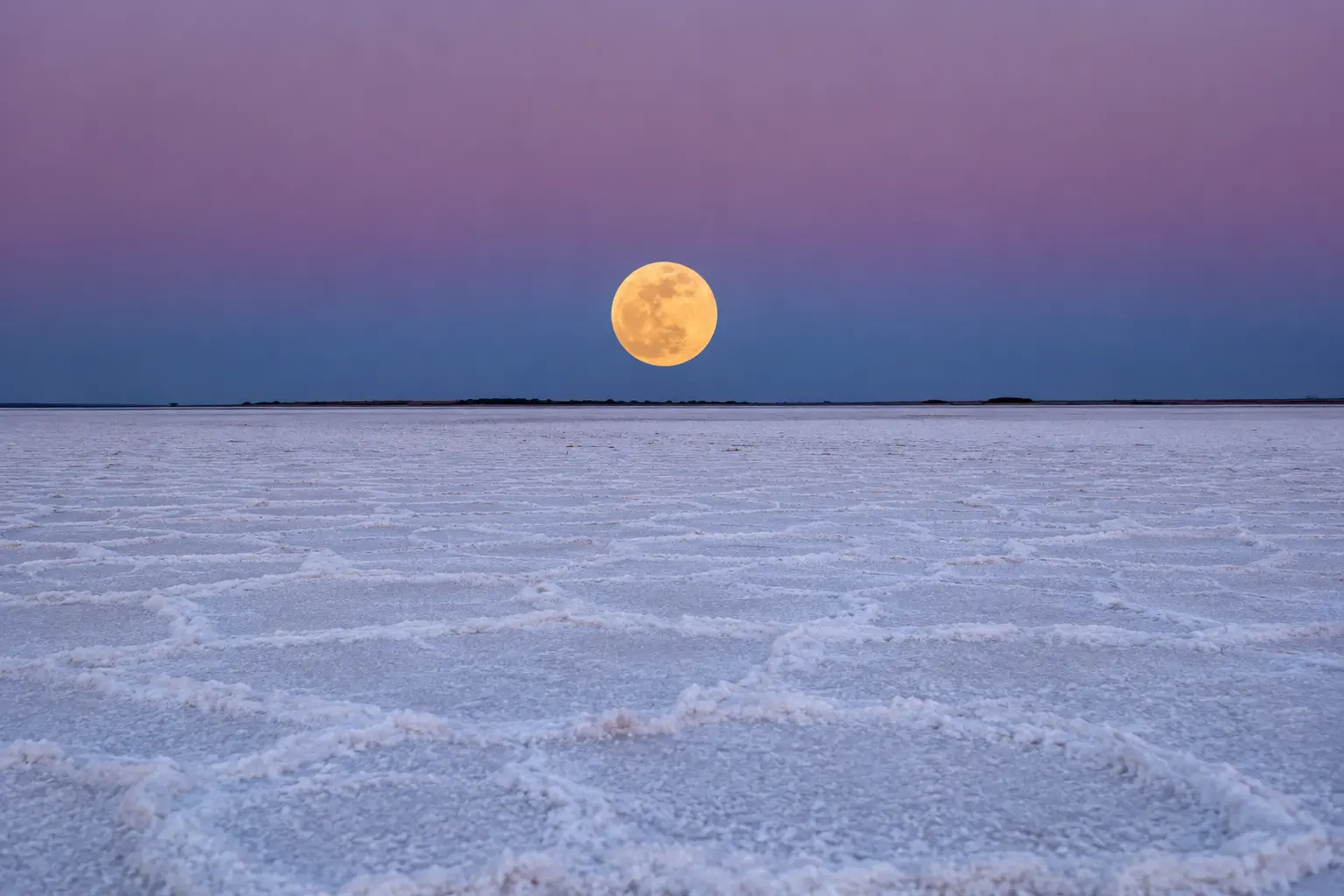
Full moon nights are the crown jewel. The salt crust reflects moonlight so strongly that you can read a book at midnight without a torch. The main viewing area near Dhordo fills with visitors, and the Tent City typically sells out these dates 4–8 weeks in advance. Plan for the full moons falling in late November, late December, late January, and late February during the 2026-27 season.
November and February offer better prices and thinner crowds. Early November can still be warm during the day, while late February begins to heat up again — but both months give you the same White Rann with more breathing room.
Avoid these mistakes:
- ❌ Booking a new-moon weekday if the moonlit Rann is your main goal
- ❌ Arriving on December 24–31 without a confirmed booking — the Christmas–New Year window is the busiest of the entire season
- ❌ Assuming daytime warmth means warm nights; December nights in the open Rann can touch 2–4°C
Pro tip: The two nights before the full moon are nearly as bright, noticeably cheaper, and easier to book. The moon also rises earlier, which works better for families with children.
Rann Utsav Dates and Timings
The Rann Utsav 2026-27 season is scheduled to run from 5 November 2026 to 4 March 2027 at the Dhordo Tent City. Gujarat Tourism confirms the exact opening ceremony each year, but the festival traditionally opens in early November and continues until early March, covering roughly 120 days.
Key timings to know:
| Item | Timing |
|---|---|
| Festival season | 5 November 2026 – 4 March 2027 |
| Tent City check-in | Typically 12:00–2:00 PM |
| Tent City check-out | Typically 10:00–11:00 AM |
| White Rann visits | Sunset slot (4:30–7:00 PM) and full-moon evenings |
| Evening cultural programme | Approximately 7:30–10:00 PM daily |
| White Rann entry permit counter | Daytime hours at the Bhirandiyara/Dhordo checkpoint |
Entry permit: Every visitor to the White Rann needs an entry permit (often called the Chandra Darshan pass), payable per person per visit. You can obtain it at the checkpoint or online through the Gujarat government’s Rann permit portal. If you stay at the Tent City through a package, confirm at booking whether the permit is included — it usually is.
How to Reach Rann Utsav
How to reach Rann Utsav is one of the most common planning questions, and the answer always routes through one city: Bhuj. Dhordo sits about 80–85 km north of Bhuj on a smooth, well-signed highway.
By Air
The nearest airport to Rann Utsav is Bhuj Airport (BHJ), roughly 80 km from the Tent City. Direct flights connect Bhuj with Mumbai (about 1.5 hours); connections from Delhi, Bengaluru, and other metros route via Mumbai or Ahmedabad. From the airport, package guests get scheduled AC coach or car transfers; independent travellers can hire a taxi (₹2,000–2,800 one way).
If Bhuj flights are full or expensive, fly into Ahmedabad (Sardar Vallabhbhai Patel International Airport), which has far more connections, then continue by road (about 400 km, 7–8 hours) or overnight train to Bhuj.
By Train
The nearest railway station to Rann Utsav is Bhuj (BHUJ), about 79 km from Dhordo. Bhuj is well connected:
- From Ahmedabad: Multiple daily trains, 7–8 hours
- From Mumbai: Direct trains including overnight options, 14–16 hours
- From Delhi: Direct trains, 20–24 hours
Most Tent City packages include pickup from Bhuj railway station at scheduled times — coordinate your train arrival with the transfer schedule when you book.
By Road
Dhordo is reached via the Bhuj–Nakhatrana–Khavda–Dhordo route (State Highway 42/45). The road is excellent, GPS works throughout, and the drive from Bhuj takes 1.5–2 hours. From Ahmedabad, budget a full day: the 400 km drive takes 7–8 hours with breaks.
Transportation options compared:
| Option | From | Time | Approx. Cost (per person) | Best for |
|---|---|---|---|---|
| Flight to Bhuj + transfer | Mumbai | ~1.5 hr flight + 1.5 hr road | ₹4,000–9,000 (flight) | Short trips, comfort |
| Flight to Ahmedabad + road | Any metro | Flight + 7–8 hr drive | Varies + ₹800–1,500 (bus) | Cheaper flights |
| Train to Bhuj | Ahmedabad | 7–8 hrs | ₹300–1,500 | Budget travellers |
| Train to Bhuj | Mumbai | 14–16 hrs | ₹500–2,500 | Overnight convenience |
| Self-drive / taxi | Ahmedabad | 7–8 hrs | ₹6,000–9,000 (car, one way) | Families, flexibility |
| Volvo / sleeper bus | Ahmedabad to Bhuj | 7–9 hrs | ₹600–1,400 | Solo budget trips |
If you would rather not manage transfers yourself, transport-inclusive options exist from both gateway cities — see the Rann Utsav package from Bhuj and the Rann Utsav package from Ahmedabad for door-to-desert itineraries.
Rann Utsav Tent City
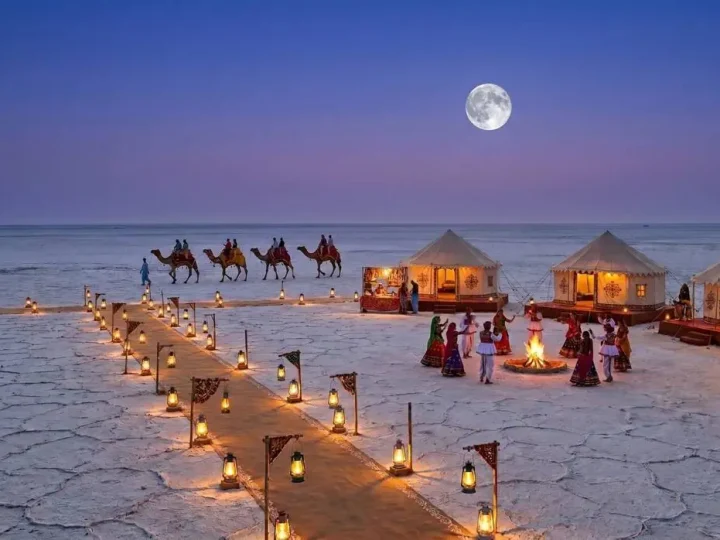
The Rann Utsav Tent City at Dhordo is the heart of the festival — a seasonal township of more than 400 tents built fresh each year on the edge of the salt flats. Calling it “camping” undersells it dramatically. Think of it instead as a canvas-walled resort.
What the Tent City includes:
- Tented accommodation across multiple comfort categories, from non-AC Swiss cottages to royal Rajwadi suites
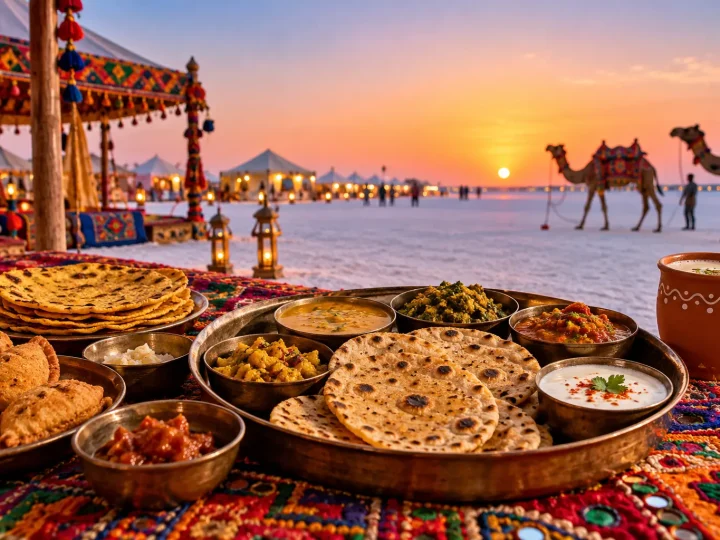
- Buffet dining halls serving Kutchi, Gujarati, and multi-cuisine vegetarian food (breakfast, lunch, evening tea, dinner in most packages)
- A daily evening cultural programme with folk music, Garba, and dance performances
- An adventure zone: ATV rides, paramotoring, archery, rifle shooting, and more
- A kids’ zone, selfie points, craft bazaar, spa and meditation facilities
- In-city buggies, medical support, and 24-hour security
- Scheduled transfers to the White Rann viewing point
The layout is walkable and organised in clusters, with the dining and entertainment areas at the centre. Buggy services help senior citizens move between tents and activity areas. Because the entire city is dismantled after each season, sustainability practices — water management, waste segregation — are built into its design.
Dhordo village itself deserves an hour of your time. Walk beyond the Tent City gates and you will find traditional circular bhunga houses with mirror-inlaid mud walls, and Mutwa women whose embroidery is among the finest in India.
For current tent categories, live availability, and season rates at Dhordo, see the Rann Utsav Tent City booking page.
Accommodation Options
Rann Utsav accommodation spans a wider range than most first-time visitors expect. Here is how the tent categories compare.
| Tent Type | What You Get | Heating/AC | Attached Bath | Ideal For | Indicative Price Band* |
|---|---|---|---|---|---|
| Non-AC Swiss Cottage | Twin/double beds, fan, basic furnishing | No | Yes | Budget travellers, groups | ₹6,000–10,000/night |
| AC Deluxe Swiss Tent | Better furnishing, climate control | Yes | Yes | Couples, families | ₹12,000–16,000/night |
| Premium / Darbari Tent | Larger space, sit-out, upgraded interiors | Yes | Yes | Rann Utsav honeymoon package seekers | ₹18,000–25,000/night |
| Rajwadi Suite | Royal-styled suite, living area, curated decor | Yes | Yes | Luxury tent booking, VIP stays | ₹25,000–35,000+/night |
| Permanent resorts near Dhordo | Cottage-style rooms open beyond festival dates | Yes | Yes | Off-peak flexibility | ₹15,000–30,000/night |
*Double occupancy, per night, meals typically included. Rates vary by date — full moon and holiday weekends carry peak pricing.
Beyond the official Tent City, several private camps and resorts operate near Dhordo and along the Bhuj–Dhordo road. These are excellent when official tents sell out, or when you want quieter surroundings. The White Rann Resort at Dhordo is one such option close to the festival ground, and a broader comparison of stay types is available on the accommodation in Rann Utsav Kutch page.
Insider tip: Non-AC tents are genuinely fine in November and February. But in peak December–January, nights get cold — a heated tent (or extra blankets, which staff provide on request) makes a real difference, especially with kids.
Rann Utsav Package Details
A typical Rann Utsav package bundles everything into one price so you never touch your wallet inside the Tent City. Standard inclusions:
- Accommodation in your chosen tent category
- Meals: usually breakfast, lunch (on full days), evening tea, and dinner — pure vegetarian buffet
- Transfers: scheduled pickup and drop from Bhuj airport/railway station
- White Rann visit: transfer to the viewing point plus entry permit
- Evening cultural programme access
- Sightseeing: most 2-night and 3-night packages add Kala Dungar and, on longer itineraries, Mandvi Beach or Bhuj city
- One activity credit on some packages (camel cart or similar)
Popular package durations:
- 1 Night / 2 Days — arrival, sunset at the White Rann, cultural evening, departure after breakfast. Feels rushed but works as a taster.
- 2 Nights / 3 Days — the most popular format. Adds Kala Dungar, the craft bazaar, and time to actually relax. Suits most families; this is the core of most Rann Utsav family package offerings.
- 3 Nights / 4 Days — adds a Dholavira or Mandvi excursion. The best choice if Kutch is a once-in-years trip for you.
Specialised variants — budget Rann Utsav package options in non-AC tents, honeymoon packages with premium tents and decor, senior-friendly itineraries with minimal walking — are all common. You can compare every duration and category side by side on the Rann Utsav packages — all options and pricing page.
Always confirm before paying:
- Is the White Rann entry permit included?
- Are transfers shared coach or private car?
- Which meals on arrival/departure days are covered?
- What is the cancellation and date-change policy?
Rann Utsav Package Price
Here is a realistic Rann Utsav package price comparison for the 2026-27 season. Treat these as planning bands; exact rates depend on tent category, date, and occupancy.
| Package | Non-AC Tent (per person) | AC Deluxe (per person) | Premium/Rajwadi (per person) |
|---|---|---|---|
| 1 Night / 2 Days | ₹5,900–8,000 | ₹9,000–13,000 | ₹15,000–22,000 |
| 2 Nights / 3 Days | ₹11,000–14,000 | ₹17,000–24,000 | ₹28,000–40,000 |
| 3 Nights / 4 Days | ₹15,500–20,000 | ₹24,000–34,000 | ₹40,000–60,000 |
What moves the price up:
- Full moon dates: expect a 15–30% premium
- Christmas–New Year week: the highest rates of the season
- Single occupancy: most rates assume double sharing; solo travellers pay more per head
- Private transfers instead of shared coaches
What brings the price down:
- November and February travel
- Weekday (Monday–Thursday) check-ins
- Early booking — the best rates appear when booking opens in the months before the season
- Larger groups sharing family tents
Children’s pricing typically works in slabs: infants free, children roughly 3–9 years at a child rate (often 50–70% of adult price without extra bed), and 10+ charged as adults. Confirm the exact slabs when booking a Rann Utsav family package.
Rann Utsav Booking Online — Step by Step
Rann Utsav booking online is straightforward once you know the sequence. Here is the process I recommend:
- Fix your dates first. Check the full moon calendar, your leave dates, and train/flight availability before paying for tents. Bhuj flights sell out around peak weekends.
- Choose your tent category and duration. Use the price tables above to shortlist.
- Book through a verified channel. Use Gujarat Tourism’s official portal or an established, authorised operator. Adhvanta India handles Rann Utsav ticket booking and tent reservations end-to-end through its Tent City booking page — you share dates, group size, and tent preference, and receive a written quote and confirmation voucher.
- Pay only via traceable methods. Bank transfer, UPI to a business account, or payment gateway — never cash to an unknown agent. Insist on a GST invoice and a confirmation voucher naming your tent category and dates.
- Book your transport immediately after. Trains to Bhuj open 60 days in advance and fill quickly for December.
- Arrange your White Rann permit. Ask your operator whether it is included; if you are travelling independently, use the Gujarat government’s online Rann permit portal or pay at the checkpoint.
- Reconfirm transfers 48 hours before arrival. Share your train/flight number so pickup timing is aligned.
Common mistake to avoid: Booking tents on a full-moon weekend before checking transport. Every season, travellers hold confirmed tents but cannot find a reasonably priced way to reach Bhuj. Always lock transport and stay together.
Cancellation reality check: Most operators refund on a slab basis (higher refund the earlier you cancel), and peak dates like New Year are often non-refundable. Read the policy before you pay, not after.
Things to Do in Rann Utsav
There are more things to do in Rann Utsav than most 2-day visitors can fit in. Here is the full menu of activities in Rann Utsav, with honest notes on each.
Camel Safari
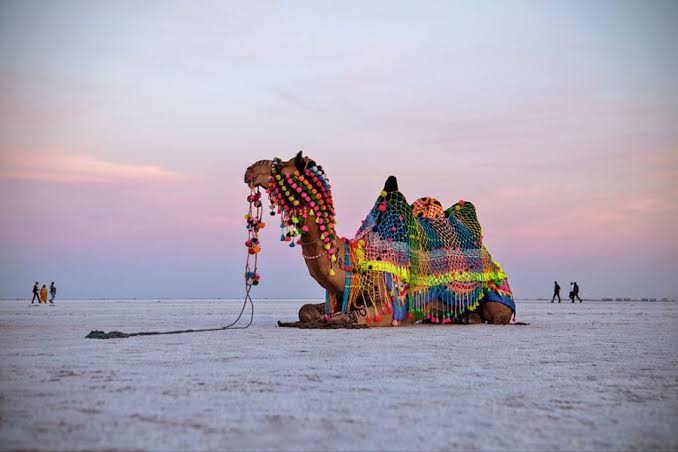
The classic. A camel ride in Rann Utsav — usually a decorated camel cart at sunset — carries you from the parking area onto the open salt crust. Rides cost roughly ₹100–300 per person for short loops. It is touristy, yes, and still worth it: the slow pace and the sound of camel bells on the silent Rann is the festival’s signature memory.
ATV Ride
The ATV ride Rann Utsav offers is the adventure zone’s most popular ticket. Quad bikes run on marked tracks near the Tent City (₹300–600 for a short circuit). Helmets are provided; kids can usually ride pillion with an adult.
Paramotoring
For a few thousand rupees, a tandem paramotor flight lifts you above the White Rann — and from the air, the scale of the salt desert finally makes sense. Flights are weather-dependent and run in morning and late-afternoon windows. Book early in your stay so a windy day doesn’t cost you the experience.
Hot Air Balloon
Tethered hot-air balloon rides operate in some seasons, offering a gentler aerial view than paramotoring. Availability varies year to year, so treat it as a bonus rather than a plan.
Cultural Programs
Every evening, the main stage hosts folk performances: Kutchi folk songs, Garba and Dandiya, Bhavai theatre, and drum ensembles. Entry is included for Tent City guests. Arrive by 7:30 PM for good seats, and stay till the end — the finale acts are usually the strongest.
Shopping
The festival haat is a curated bazaar of Kutchi crafts — more on this in the Shopping Guide below.
Local Food
From the buffet’s Gujarati thali spread to roadside dabeli in Bhuj, food is an attraction in its own right. See the Food Guide.
Sunset Viewing
Sunset on the White Rann rivals the full moon. The salt turns gold, then pink, then violet. Reach the viewing point by 5:00 PM in winter; the colour show peaks in the 20 minutes after the sun touches the horizon.
White Desert Walk
Skip the vehicles at least once and simply walk. Ten minutes past the crowd, the noise dies away completely. The crunch of salt under your shoes and the flat white emptiness in every direction is a kind of silence most of us have never heard.
Photography
Photography at White Rann is a genre unto itself. Practical pointers:
- Golden hour and blue hour produce the best colour; midday shots blow out to pure white glare
- Carry a polarising filter to manage reflection off the salt
- For full-moon shots, a tripod and 2–5 second exposures capture the glow without noise
- Use people or camel carts as scale references — empty white frames look flat
- Protect gear from fine salt dust; a simple rain cover works
Nearby Places to Visit
Kutch rewards travellers who venture beyond the Tent City. These are the excursions worth your time, with distances from Dhordo.
Kala Dungar (Black Hill)
At 462 metres, Kalo Dungar is the highest point in Kutch, about 25 km from Dhordo. The summit viewpoint delivers a panoramic sweep of the entire White Rann — the only place where you truly grasp its scale. The 400-year-old Dattatreya temple sits at the top. Go for sunrise if you can.
India Bridge
Around 20 km from Dhordo, India Bridge marks the edge of the civilian zone before the border area. Visitors photograph the signage from the approach; the bridge itself is a defence installation, so carry ID and respect army instructions.
Dholavira
The UNESCO World Heritage Harappan city, about 210 km from Dhordo (a long but spectacular day trip via the “Road to Heaven” across the Rann). Walking the 4,500-year-old reservoirs and gates of Dholavira after seeing the timeless Rann is a genuinely moving one-two experience. Requires a 3-night itinerary or an added day.
Mandvi Beach
About 140 km south of Dhordo (60 km beyond Bhuj), Mandvi pairs a clean, calm beach with the elegant Vijay Vilas Palace and a 400-year-old shipbuilding yard where wooden dhows are still built by hand.
Narayan Sarovar
One of Hinduism’s five sacred lakes, roughly 150 km west of Bhuj near the westernmost tip of India. Usually combined with Koteshwar.
Koteshwar Temple
An ancient Shiva temple standing at the edge of the Arabian Sea, 4 km from Narayan Sarovar — the sunset here, with the sea on three sides, is worth the long drive for road-trippers.
Distance chart from Dhordo Tent City:
| Destination | Distance | Time by Road | Fits Which Itinerary |
|---|---|---|---|
| White Rann viewing point | 5–7 km | 15 min | Every visit |
| Kala Dungar | ~25 km | 45 min | 2-day and up |
| India Bridge | ~20 km | 30 min | 2-day and up |
| Bhuj city | ~85 km | 1.5–2 hrs | Transit day |
| Mandvi Beach | ~140 km | 3 hrs | 3-day |
| Dholavira | ~210 km | 4 hrs | 3-day (full day) |
| Narayan Sarovar–Koteshwar | ~235 km | 4.5–5 hrs | Extended road trips |
Suggested 2-Day Itinerary
A tight but satisfying Rann Utsav itinerary for a 1-night/2-day trip:
Day 1
- 11:00 AM — Arrive Bhuj (flight/train); board transfer to Dhordo
- 1:30 PM — Check in to Tent City; lunch at the dining hall
- 3:00 PM — Explore the craft bazaar and adventure zone; try the ATV ride
- 4:45 PM — Camel cart to the White Rann for sunset
- 6:30 PM — Linger for moonrise (time it with the lunar calendar!)
- 7:45 PM — Return; dinner and the evening cultural programme
- 10:30 PM — Optional stargazing walk
Day 2
- 6:30 AM — Sunrise visit to the Rann or Kala Dungar (if transfer timing allows)
- 8:30 AM — Breakfast and check-out
- 11:00 AM — Dhordo village walk: bhungas and Mutwa embroidery
- 12:00 PM — Depart for Bhuj; visit Aina Mahal/Prag Mahal if time permits before your train or flight
Suggested 3-Day Itinerary
The 2-night/3-day format is the one I recommend to most travellers.
Day 1 — Arrival and the White Rann
- Reach Bhuj by noon; transfer to Dhordo; check in and lunch
- Afternoon: adventure zone and paramotoring (book your slot on arrival)
- Sunset and moonrise at the White Rann
- Dinner and cultural programme
Day 2 — Kala Dungar and slow Rann time
- Early start for Kala Dungar sunrise; breakfast on return
- Late morning: spa, meditation hall, or simply do nothing — under-rated at Rann Utsav
- Afternoon: Dhordo village and craft shopping
- Evening: second White Rann visit — walk deep this time, past the crowds
- Cultural programme finale night
Day 3 — Bhuj heritage and departure
- Breakfast, check-out, transfer toward Bhuj
- Bhuj sightseeing: Prag Mahal, Aina Mahal, and the Bhujodi weaver village en route
- Late-afternoon flight or evening train out
With a fourth day, insert Dholavira between Days 2 and 3 — the UNESCO site plus the Road to Heaven drive is the single best add-on in all of Kutch.
Travel Budget
Here is a realistic per-person budget for a 2-night/3-day trip, double occupancy, ex-Ahmedabad.
| Expense Head | Budget Trip | Mid-Range | Premium |
|---|---|---|---|
| Transport (Ahmedabad↔Bhuj) | ₹1,200 (train SL/3A) | ₹3,000 (3A/flight deal) | ₹9,000 (flights) |
| Package (2N/3D, per person) | ₹11,000 (non-AC) | ₹19,000 (AC Deluxe) | ₹35,000 (Premium) |
| Activities (ATV, paramotoring, camel) | ₹500 | ₹2,000 | ₹5,000 |
| Shopping | ₹1,000 | ₹3,000 | ₹8,000+ |
| Food outside package + misc | ₹800 | ₹1,500 | ₹3,000 |
| Approx. total per person | ₹14,500 | ₹28,500 | ₹60,000 |
A couple can therefore experience Rann Utsav comfortably for roughly ₹30,000–55,000 all-in, while a budget-conscious solo traveller using trains and a non-AC tent can manage under ₹15,000.
Travel Tips
Hard-earned Rann Utsav travel tips from repeated visits:
- Carry original photo ID for every traveller — required for permits and check-in; the area is close to an international border.
- Cash still matters. UPI works at the Tent City and most stalls, but network coverage dips; keep ₹2,000–3,000 in cash.
- Sunglasses are not optional. Midday glare off the salt is genuinely harsh; polarised lenses help.
- Layer, don’t bulk. A 25°C afternoon becomes a 5°C night. Layers beat one heavy coat.
- Book paramotoring on Day 1. Wind cancellations happen; give yourself a retry window.
- Respect the Rann. Carry back every wrapper. The salt crust preserves litter for years.
- Salt is corrosive — wipe shoes, tripods, and camera bags after Rann visits.
- Travelling with elders? Request a tent near the dining hall and use the buggy service; distances inside the Tent City add up.
- Alcohol is prohibited. Gujarat is a dry state; don’t risk it. (Foreign tourists can obtain liquor permits for designated shops in cities, not at the festival.)
- Keep half a day buffer before long-distance trains/flights — winter fog occasionally delays morning transfers.
Packing Checklist
Your Rann Utsav packing list, organised by priority:
| Category | Items |
|---|---|
| Documents | Original photo ID (Aadhaar/passport), booking vouchers, permit printout, train/flight tickets |
| Clothing — day | Light cottons, full-sleeve shirts (sun), comfortable walking shoes |
| Clothing — night | Heavy jacket or fleece, thermals (Dec–Jan), woollen cap, gloves, warm socks |
| Sun protection | Polarised sunglasses, SPF 50 sunscreen, lip balm, wide-brim hat/cap |
| Health | Personal medicines, moisturiser (dry desert air), ORS sachets, basic first-aid |
| Gear | Power bank, torch/headlamp, camera + tripod + spare batteries (cold drains them), polarising filter |
| Misc | Cash, reusable water bottle, small backpack for Rann visits, zip-lock bags against salt dust |
| For kids | Extra warm layers, snacks, motion-sickness remedy for the winding Kala Dungar road |
Weather Guide
Rann Utsav weather is classic desert winter: bright, dry days and sharply cold nights. Humidity is low all season.
| Month | Day High | Night Low | Character |
|---|---|---|---|
| November | 30–33°C | 14–18°C | Warm days, pleasant nights, thinner crowds |
| December | 26–28°C | 8–12°C (can dip to 4°C) | Peak comfort by day, genuinely cold nights |
| January | 25–27°C | 6–10°C (occasional 2–4°C snaps) | Coldest nights, clearest skies, best stargazing |
| February | 29–32°C | 11–15°C | Warming up, great value, spring light |
| Early March | 33–36°C | 16–19°C | Season close; hot afternoons |
Rain is rare but not impossible; a stray winter shower can leave a thin water film on the Rann that creates surreal mirror reflections — photographers pray for exactly this.
Food Guide
Food in Rann Utsav is entirely vegetarian and proudly local. Inside the Tent City, buffets rotate Gujarati and Kutchi specialities alongside familiar North Indian and continental dishes, with Jain options available.
Do not leave Kutch without trying:
- Kutchi dabeli — the region’s iconic spiced-potato bun, best from Bhuj street vendors
- Bajra no rotlo with ringna no odo — pearl millet flatbread with smoky roasted-aubergine mash, the soul food of Banni
- Kadak chai — strong, sweet, milky tea served in small glasses, ideally beside a bonfire
- Gujarati thali — dal, kadhi, seasonal shaak, farsan, rotli, and something sweet, refilled endlessly
- Mawa sweets from Bhuj — the Kutchi mawa (khoya) tradition produces outstanding gulab jamun and mesuk
- Chhaas (buttermilk) — the Banni region’s buffalo-milk buttermilk is exceptional
Practical notes: meals at the Tent City run on fixed buffet timings — don’t skip lunch expecting snacks later. Tea/coffee stalls operate through the evening near the cultural stage. Outside food and alcohol are not permitted.
Shopping Guide
Shopping in Rann Utsav is the easiest way to take Kutch home — and one of the best-value craft markets in India because you often buy directly from the maker.
What to buy, and fair price bands:
- Kutchi embroidery (Mutwa, Ahir, Rabari styles): cushion covers ₹300–800, embellished dupattas ₹800–3,000, heirloom pieces far higher
- Bandhani (tie-dye) sarees and dupattas: ₹500–5,000 depending on fabric and knot density
- Ajrakh block prints: natural-dyed stoles and fabric from the Khatri printers of Ajrakhpur, ₹600–4,000
- Rogan art: castor-oil paint art practised by a single family in Nirona village — small framed pieces from ₹1,500; genuinely collectible
- Mirror-work and leather goods, copper bells from Nirona, lacquer wood from the Vada community
Buying smart:
- Prices at the festival haat are mostly fixed and fair; bargain gently at independent stalls, never at artisan-run counters
- Ask who made the piece — sellers who made their own goods will happily tell you the village and technique
- If you have time, shop at source: Bhujodi (weaving), Nirona (Rogan and bells), Ajrakhpur (block printing) all sit on or near the Bhuj–Dhordo route
Frequently Asked Questions
What is Rann Utsav and why is it famous?
Rann Utsav is Gujarat Tourism’s annual winter festival held on the White Rann, the salt desert of Kutch, near Dhordo village. It is famous for its glowing full-moon desert nights, its luxury Tent City, Kutchi folk performances, and one of India’s richest handicraft bazaars.
What are the Rann Utsav 2026-27 dates?
The 2026-27 season is scheduled from 5 November 2026 to 4 March 2027 at the Dhordo Tent City. Gujarat Tourism confirms the exact opening ceremony closer to the season, so verify dates when you book.
Is Rann Utsav worth visiting?
Yes — if you value landscapes, culture, and photography. The full-moon White Rann is a genuinely unique sight in India. It is less suitable if you are looking for nightlife or non-vegetarian dining, since Gujarat is a dry, largely vegetarian state.
How do I book Rann Utsav tickets online?
Fix your dates, choose a tent category, and book through Gujarat Tourism’s portal or an authorised operator such as Adhvanta India’s Tent City booking service. Pay by traceable methods and insist on a written confirmation voucher.
What is the Rann Utsav package price for a couple?
A couple typically spends ₹22,000–28,000 for a 2-night non-AC package, ₹34,000–48,000 for AC Deluxe, and ₹56,000+ for premium tents — excluding transport to Bhuj. Full-moon and New Year dates cost more.
Which is the nearest airport and railway station to Rann Utsav?
Bhuj serves both: Bhuj Airport (BHJ) and Bhuj railway station are each roughly 79–85 km from Dhordo. Ahmedabad (about 400 km away) is the larger alternative gateway with more flight connections.
Can I visit the White Rann without booking the Tent City?
Yes. Day visitors can drive to Dhordo, pay the White Rann entry permit fee at the checkpoint (or online), and see the desert at sunset. You will, however, miss the evening cultural programme and the ease of a moonlit stay.
What is the best time to visit Rann Utsav?
December and January offer the best weather, and full-moon nights offer the best spectacle. For lower prices and fewer crowds, choose November or February — the desert looks identical.
Is Rann Utsav good for a honeymoon?
Very. Premium and Rajwadi tents, private sit-outs, moonlit desert walks, and bonfire evenings make it a strong honeymoon choice. Book a full-moon date and a premium tent category well in advance.
Is Rann Utsav suitable for children and senior citizens?
Yes. The Tent City has a kids’ zone, buggy transport, medical support, and short walking distances. Pack serious warm layers for December–January nights, and request a tent near the dining area for elders.
What should I pack for Rann Utsav?
Original photo ID, warm layers (thermals in Dec–Jan), polarised sunglasses, sunscreen, moisturiser, comfortable shoes, a power bank, and some cash. See the full packing checklist above.
Is alcohol or non-vegetarian food available at Rann Utsav?
No. Gujarat is a dry state and the Tent City serves pure vegetarian food only. Plan accordingly — the Kutchi and Gujarati vegetarian spread is excellent.
How cold does it get at night in the Rann of Kutch?
December and January nights typically fall to 6–10°C and can occasionally touch 2–4°C on the open Rann. Days remain a pleasant 25–28°C.
What activities are available at the Tent City?
Camel cart rides, ATV rides, paramotoring, archery, rifle shooting, cycling, a kids’ zone, spa and meditation facilities, stargazing, daily folk-culture programmes, and the craft bazaar. Tethered balloon rides operate in some seasons.
How many days are enough for Rann Utsav?
Two nights is the sweet spot: it covers sunset, a full evening programme, Kala Dungar, and unhurried Rann time. Choose three nights if you want to add Dholavira or Mandvi Beach.
Do I need a permit to enter the White Rann?
Yes. Every visitor pays a per-person entry fee (the Chandra Darshan pass) at the Bhirandiyara/Dhordo checkpoint or via the Gujarat government’s online Rann permit portal. Most Tent City packages include it — confirm at booking.
Can I book a Rann Utsav package from Ahmedabad or Bhuj with transport included?
Yes. Transport-inclusive itineraries run from both cities — see the package from Ahmedabad and the package from Bhuj options for coach or car-based round trips.
Final Conclusion
Rann Utsav is one of those rare travel experiences that is simultaneously easy and extraordinary. Easy, because the Tent City, transfers, and packages remove every logistical headache. Extraordinary, because nothing else in India looks or feels like the White Rann under a full moon — a landscape so blank and bright that it resets something in you.
Plan around the moon, book early for peak dates, pack for cold nights, and give yourself at least two nights. Do that, and the Rann Utsav Gujarat experience will justify every kilometre of the journey to this far western edge of India.
When you are ready to lock your dates, start with the season-updated Rann Utsav guide, compare all packages and pricing, and reserve your tent through the Tent City booking page. The white desert is waiting.